Journal20 октября 2018 г.

How to create a restaurant QR menu in 2026: complete guide

Step-by-step guide to creating a restaurant QR menu in 2026: formats, mobile UX, images, QR placement, and content quality checks.

How to create a restaurant QR menu in 2026: complete guide

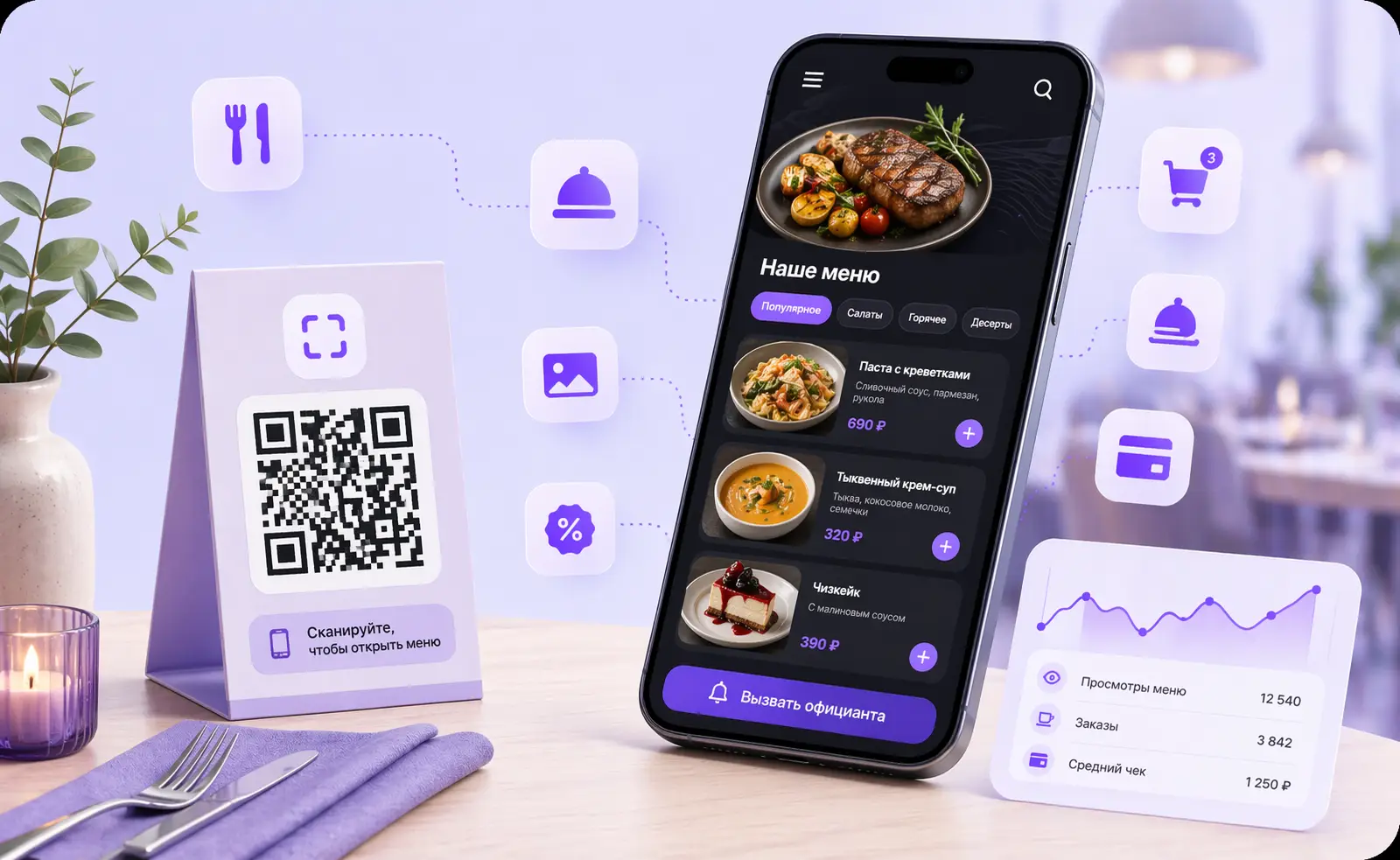
A restaurant QR menu helps restaurants update menus faster, reduce print costs, and give guests a cleaner mobile experience. Instead of replacing paper menus every time a price, dish, or availability changes, the team edits one digital source and the QR code keeps working. This complete guide covers formats, setup steps, technical requirements, QR placement, and the checks needed before launch.

Why restaurants should move to a QR menu in 2026

QR menu is not only a replacement for a PDF. For restaurants, it becomes an operational tool that keeps information accurate and easier to manage.

Key tasks it solves:

  • Instant updates. Change prices, descriptions, photos, and stop-list items without reprinting.

  • A better guest experience. Guests open a mobile-friendly page with categories, clear prices, descriptions, and photos.

  • Fewer staff interruptions. Common questions about availability, ingredients, and prices are answered directly in the menu.

  • More control over content. The team can highlight profitable items, seasonal offers, new drinks, or limited-time dishes.

  • Analytics. Views, popular categories, and menu interaction data help owners understand demand instead of guessing.

For a small venue, the biggest benefit is speed. For a growing business, the biggest benefit is control.

Digital menu formats: from simple to advanced

There are three common ways to publish a digital menu. Each has a different balance of speed, cost, and flexibility.

Format Best for Advantages Limitations
PDF behind a QR code Very small venues with rarely changing menus Quick to launch, inexpensive, familiar workflow Poor mobile UX, no search, no analytics, every update requires replacing the file
Interactive web menu Cafes and restaurants that update content regularly Mobile-first, editable, supports photos, categories, translations, and analytics Requires choosing a platform and setting up the first version
POS or inventory integration Chains and teams with centralized operations Can automate prices, availability, and stock data Higher setup cost, technical work, and longer launch time

For most restaurants, an interactive web menu is the practical middle ground: it is fast to launch, easy to edit, and does not require a custom development project.

Step-by-step QR menu setup with KwikMenu

AI reduces the most time-consuming part of menu setup: turning an old PDF, photo, or scan into structured categories and items.

  1. Upload the source menu
    Start with a PDF, photo, scan, spreadsheet, or existing menu file. The system extracts item names, descriptions, prices, and categories.

  2. Review the structure
    Check categories, spelling, prices, item order, and unavailable items. AI speeds up the draft, but the final review should always be done by the venue team.

  3. Add photos and descriptions
    Use photos where they help guests decide. Keep descriptions short, specific, and useful: ingredients, preparation style, portion size, or flavor profile.

  4. Configure languages and currency
    A QR menu can be translated for tourists and international guests. Always review translations for allergens, dish names, and local terms.

  5. Publish and print the QR code
    Once the page is ready, publish it and place the QR code on tables, counters, windows, delivery inserts, and social media.

AI is best used as an assistant, not as an autopilot. It creates the first version quickly; the business keeps control over accuracy.

Technical content requirements in 2026

In 2026, most guests open menus on mobile devices. The page must be fast, readable, and easy to navigate.

Recommended requirements:

  • Use WebP or similarly optimized image formats.

  • Keep preview images lightweight and consistent.

  • Use readable font sizes on mobile screens.

  • Make buttons and category tabs easy to tap.

  • Avoid horizontal scrolling inside the main menu.

  • Test in Safari on iOS and Chrome on Android.

  • Keep the QR destination stable so printed materials do not need replacement.

If the menu loads slowly or looks like a desktop page squeezed into a phone, guests will close it quickly.

Where and how to place QR codes for maximum reach

A QR menu works only when guests notice it and understand what to do. Placement matters as much as the menu itself.

  • Table tents. The most reliable format for dine-in guests. Put the QR code at eye level with a simple call to action.

  • Stickers on tables. Good for compact spaces, counters, and quick-service formats. Use durable material so the code stays scannable.

  • Entrance and host stand. Helps guests check the menu before sitting down or while waiting.

  • Windows and outdoor signs. Useful for people deciding whether to enter.

  • Delivery inserts. Add the QR menu to packaging or flyers to bring customers back to the current menu.

  • Social media and Google Business Profile. Place the menu link where guests already search for you.

For restaurants, the best setup is usually a combination of table placement, a link in social profiles, and a QR code at the entrance.

Frequently asked questions

Does a guest need to download an app?

No. The menu opens in a regular mobile browser after scanning a QR code or following a link.


Can prices be changed without replacing the QR code?

Yes. The QR code points to a permanent menu link. You update the content in the dashboard, and guests see the new version immediately.


Can I start from a PDF or photo?

Yes. A QR menu can be created from a PDF, scan, photo, spreadsheet, or manually entered content. AI can speed up the first draft.


Should every dish have a photo?

Not necessarily. Photos help with signature dishes, desserts, drinks, and high-margin items. It is better to use fewer accurate photos than many low-quality images.


Can the menu be translated?

Yes. Translations are useful for tourists and international guests, but dish names, allergens, and ingredient details should always be reviewed before publishing.

Ready to digitize your restaurant in 10 minutes?